The water is gone, but the job isn’t finished yet. In fact, knowing how to dry out a house after water damage properly is what separates a full recovery from a home that keeps causing problems for months. Otherwise, hidden moisture can quietly lead to mold, warped floors, and weakened walls.
In this guide, we’ll walk through exactly how professionals dry out a house after water damage, step by step. We’ll also cover the equipment involved, realistic timelines, and how to know when a home is truly dry. Throughout the process, our team at Full Service Property Restoration brings hands-on experience from homes across Texas.
Key Takeaways
- Knowing how to dry out a house after water damage the right way prevents mold and structural issues.
- Professionals use moisture mapping, air movers, and dehumidifiers together, not just fans.
- Most homes take three to five days to fully dry, though larger losses take longer.
- A home isn’t dry until moisture readings match a proper dry standard, not just when it feels dry.
- Texas humidity makes professional drying even more important than in drier climates.
Why Drying Out a House After Water Damage Matters
First, it’s worth understanding what’s at stake. Once water is extracted, moisture often remains trapped in walls, subfloors, and insulation. As a result, relative humidity stays high in these hidden spaces, even when the surface looks dry.
Consequently, if a house isn’t dried properly after water damage, mold can begin forming within days. In fact, our guide on How Fast Does Mold Grow After Water Damage? breaks down just how quickly that timeline moves. That’s exactly why thorough drying isn’t optional. It’s the step that protects everything else.
Can You Dry Out Water Damage Yourself?
For a very small, quickly caught spill, basic fans and a household dehumidifier can sometimes help. However, for anything beyond a minor incident, DIY drying usually falls short.
The reason is simple. Household equipment isn’t strong enough to pull moisture out of dense materials like subflooring or drywall cavities. So, while the surface may feel dry within a day, hidden moisture often lingers for much longer, quietly causing damage out of sight.
Not Sure If Your Home Is Fully Dry?
How Professionals Dry Out a House After Water Damage: The Process
So, what does professional drying actually look like? Here’s how it typically works, from start to finish.
Step 1: Moisture Mapping and Assessment
First, technicians use moisture meters and thermal imaging to locate water that isn’t visible. This step matters because it reveals exactly where drying equipment needs to go, rather than guessing.
Step 2: Structural Drying Equipment Setup
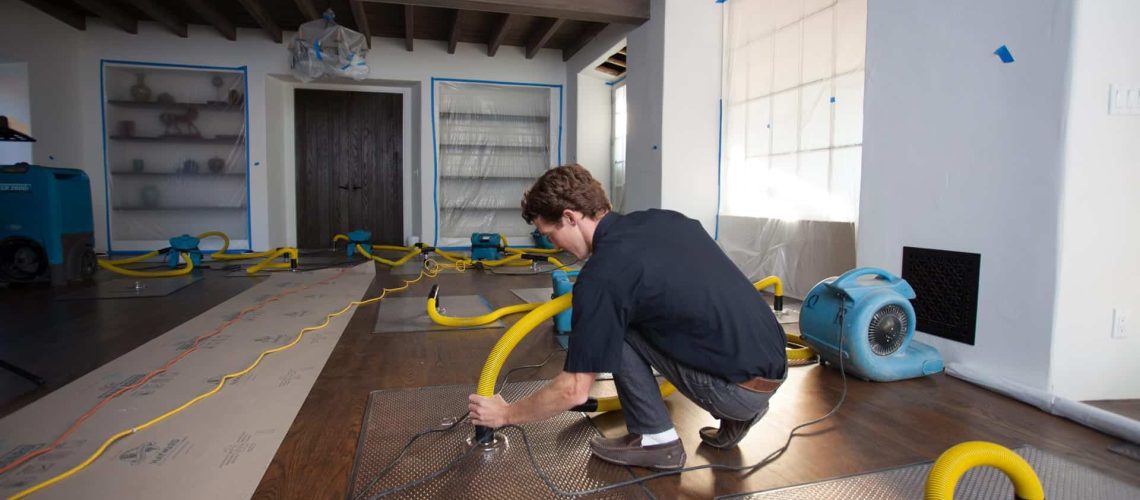
Next, air movers and dehumidifiers are positioned strategically, not randomly. Airflow is calculated to move moisture out of materials, while dehumidifiers pull that moisture out of the air. Together, this creates a drying system, rather than just a room full of fans.
Step 3: Monitoring and Adjusting Daily
After setup, technicians return daily to take new moisture readings. Then, equipment is adjusted based on progress. This ongoing monitoring is what keeps the drying process on track, rather than leaving it to chance.
Step 4: Drying Specific Materials
Meanwhile, different materials dry differently. Hardwood floors can cup or warp if dried too quickly, while drywall tends to wick moisture upward. Because of this, technicians adjust their approach based on what’s actually affected, not a one-size-fits-all method.
Step 5: Verifying the Home Is Fully Dry
Finally, a home isn’t considered dry just because it looks or feels dry. Instead, final moisture readings are compared against a dry standard, which is based on unaffected materials in the same home. Only once readings match is the drying process complete.
Let Our Technicians Handle the Drying Process

What Equipment Do Professionals Use to Dry Water Damage?
Professional drying relies on equipment built for this exact job, including:
- Air movers for targeted airflow
- Low-grain refrigerant (LGR) dehumidifiers for deep moisture removal
- Moisture meters for accurate readings
- Thermal imaging cameras to find hidden moisture
- Specialty drying mats or injection systems for hardwood and cavities
Altogether, this equipment works together as a system. That’s a big part of why professional results are so different from a few box fans running overnight.
How Long Does It Take to Dry Out a House After Water Damage?
Generally, a standard-sized affected area takes about three to five days to dry fully. However, larger losses, contaminated water, or homes with extensive hidden moisture can take longer. Ultimately, the timeline depends on the size of the area, the materials involved, and how quickly drying began.
For context on how the earlier stages affect this timeline, take a look at our guide on Emergency Water Extraction: What Happens in the First 24 Hours. Fast extraction, followed by proper drying, is what keeps this whole process as short as possible.
Drying Out a House After Water Damage in Texas
Texas homes face a unique drying challenge. Between hot, humid summers and heavy storm season, outdoor air often carries as much moisture as the affected home itself. Because of this, opening windows for airflow can actually work against you here, unlike in drier climates.
That’s why professional dehumidification matters even more across Houston, Dallas, Austin, and San Antonio. Full Service Property Restoration’s water damage restoration team accounts for local humidity conditions on every job, so drying stays on track no matter the season.
Frequently Asked Questions
How do professionals dry out a home after water damage?
Professionals map moisture with meters and thermal imaging, then place air movers and dehumidifiers strategically. They monitor readings daily and adjust equipment until moisture levels match a dry standard throughout the home.
How long does professional drying take after water damage?
Most standard-sized areas take three to five days to dry fully. Larger losses or homes with extensive hidden moisture can take longer, depending on materials affected and how quickly drying began.
What equipment is used to dry a house after water damage?
Professionals use air movers, LGR dehumidifiers, moisture meters, and thermal imaging cameras. Together, this equipment removes moisture from materials and the air faster and more thoroughly than household fans.
How do you know when a house is completely dry?
A house is fully dry when moisture readings match a dry standard, based on unaffected materials in the same home. Visual dryness alone isn't a reliable indicator, since hidden moisture can remain in walls or subfloors.
Can you dry out water damage yourself?
For very minor, quickly caught spills, basic fans may help. For anything larger, household equipment usually can't remove moisture from dense materials, which often leaves hidden dampness behind.
Ready to Dry Out Your Home the Right Way?
Knowing how to dry out a house after water damage is one thing. Having the right equipment and experience to do it thoroughly is another. If you’re dealing with water damage right now, Full Service Property Restoration is ready to help, from moisture mapping to final verification. Contact us today to get your home back to a true dry standard.